Last Updated on August 20, 2026
Choosing the right programming language is one of the most important decisions for anyone starting or advancing a career in software development. With rapid advancements in Artificial Intelligence (AI), cloud computing, and modern web technologies, the demand for programming languages is constantly evolving.
If you’re just getting started, you may also find this helpful guide on How to upgrade PHP version in Windows, especially if you’re working in a local development environment.
In 2026, the tech industry is driven by automation, data, scalability, and performance. According to industry trends and developer reports from platforms like Stack Overflow Developer Survey and GitHub Trends, languages like Python, JavaScript, and TypeScript dominate the market, while newer languages like Rust and Go are rapidly growing in demand.
You can also explore tools that support development workflows in our article on Top 10 Best SEO Tools.
This article covers the top programming languages of the future based on real market demand, job trends, and growth potential. Whether you’re a beginner or an experienced developer, this guide will help you choose the right language to stay competitive in the evolving tech landscape. If you’re planning to build a freelance career, don’t miss our guide on how to become an Upwork freelancer.
How We Ranked These Programming Languages
This list is based on:
- Job demand and hiring trends
- Developer usage (Stack Overflow, GitHub)
- Growth rate and future scope
- Industry relevance (AI, Cloud, Web, Mobile)
Top Programming Languages of the Future (2026 Ranking)
1. Python – The King of AI & Data Science
Python is the most in-demand programming language in 2026, driven by the explosion of AI, machine learning and data science. Its simplicity and powerful libraries make it ideal for beginners and professionals alike.
If you’re setting up your development environment, check out our guide on how to upgrade the PHP version in Windows.
- Dominates AI, ML, and data science
- Simple and beginner-friendly
- Massive ecosystem (TensorFlow, Pandas)
Use Cases: AI, Machine Learning, Data Analysis, Automation
Why It Matters: Python leads rankings with massive adoption and job demand.
2. JavaScript – The Backbone of the Web
JavaScript remains the most widely used programming language globally, powering over 60% of developers’ work. According to MDN Web Docs, it is one of the core technologies of the web alongside HTML and CSS. If you’re planning to build websites or freelance projects, you can also read how to become an Upwork freelancer.
- Essential for frontend (React, Vue)
- Backend support via Node.js
- Huge ecosystem
Use Cases: Web Development, Full Stack Apps
Why It Matters: Still the #1 most-used language worldwide.
3. TypeScript – The Future of JavaScript
TypeScript is a superset of JavaScript that adds static typing, making applications more scalable and maintainable.
Large companies rely on it for enterprise applications. You can explore official documentation on TypeScript official website.
- Adds type safety to JavaScript
- Improves code quality and scalability
- Used by big companies like Microsoft and Google
Use Cases: Enterprise Web Apps, Scalable Systems
Why It Matters: Ranked #1 in some modern popularity indexes.
4. Go (Golang) – Cloud & Backend Champion
Go is one of the fastest-growing languages for backend and cloud-native applications. Go is widely used in cloud-native development and backend services. Companies building scalable infrastructure often prefer Go.
Learn more about cloud computing from AWS Cloud Computing Guide.
- Developed by Google
- High performance and scalability
- Ideal for microservices
Use Cases: Cloud Computing, APIs, DevOps
Why It Matters: High demand in cloud infrastructure.
5. Rust – The Future of Secure Systems
Rust is known for memory safety and performance. It is gaining popularity in system programming and cybersecurity.
You can explore Rust’s ecosystem on the official Rust website.
- No memory leaks
- High performance like C++
- Loved by developers
Use Cases: System Programming, Security, Blockchain
Why It Matters: One of the fastest-growing languages globally.
If you’re unsure which programming language to choose based on your career goals, check out our detailed guide on Best Programming Languages to Learn in 2026 to make the right decision.
6. Java – Enterprise Backbone
Java continues to dominate enterprise systems and large-scale applications. Java continues to dominate enterprise applications and backend systems. According to Oracle Java documentation, it powers billions of devices worldwide.
- Platform-independent
- Used in banking and enterprise apps
- Strong ecosystem
Use Cases: Enterprise Applications, Backend Systems
7. C# – Microsoft Ecosystem Leader
C# is widely used in enterprise development and game development using Unity. Learn more from Microsoft C# documentation.
- Strong .NET ecosystem
- Used in Unity game engine
- High demand in enterprise apps
Use Cases: Game Development, Enterprise Software
8. SQL – The Backbone of Data
SQL is essential for database management and data-driven applications.
You can learn SQL basics from W3Schools SQL Tutorial. Also, check our related article on Top SEO tools to understand data-driven strategies.
- Used in almost every application
- Critical for data analysis
- High demand in all industries
Use Cases: Database Management, Data Engineering
Why It Matters: Required skill in most tech jobs.
9. Kotlin – Android Development Standard
Kotlin is the preferred language for Android development. Explore more on the official Kotlin website.
- Modern and concise syntax
- Fully compatible with Java
- Officially supported by Google
Use Cases: Android Apps, Backend
10. Swift – iOS Development Leader
Swift is the go-to language for Apple ecosystem applications. Swift is used for iOS and macOS app development.
Apple provides detailed documentation on Swift programming.
- Fast and safe
- Modern syntax
- High demand in mobile development
Use Cases: iOS Apps, macOS Apps
11. C++ – High Performance Powerhouse
C++ remains critical for performance-heavy applications. C++ is widely used in game engines and system software due to its high performance. For learning resources, visit cplusplus.com.
- Used in gaming and system software
- High execution speed
- Strong control over memory
Use Cases: Game Development, Systems
12. PHP – Still Relevant for Web
PHP powers a large portion of websites, especially CMS platforms like WordPress.
If you’re working with PHP, you may also want to read Freelancing jobs in India with PHP?.
- Easy to learn
- Strong web ecosystem
- Still widely used
Use Cases: Web Development, CMS
Programming Language Comparison Table
| Language | Best For | Difficulty | Demand Level |
|---|---|---|---|
| Python | AI, Data Science | Easy | Very High |
| JavaScript | Web Development | Easy | Very High |
| TypeScript | Enterprise Web | Medium | Very High |
| Go | Cloud | Medium | High |
| Rust | Systems | Hard | High |
| Java | Enterprise | Medium | High |
| C# | Games, Enterprise | Medium | High |
| SQL | Data | Easy | Very High |
| Kotlin | Android | Medium | Growing |
| Swift | iOS | Medium | Growing |
| C++ | Systems | Hard | Stable |
| PHP | Web | Easy | Moderate |
Future Trends in Programming (2026+)
- AI-driven development (Python dominance)
- Cloud-native apps (Go growth)
- Secure systems (Rust adoption)
- Type-safe web development (TypeScript boom)
- Data-driven decision making (SQL importance)
How to Choose the Right Programming Language
- AI & Data: Python
- Web Development: JavaScript / TypeScript
- Cloud: Go
- Mobile Apps: Kotlin / Swift
- Enterprise: Java / C#
Conclusion
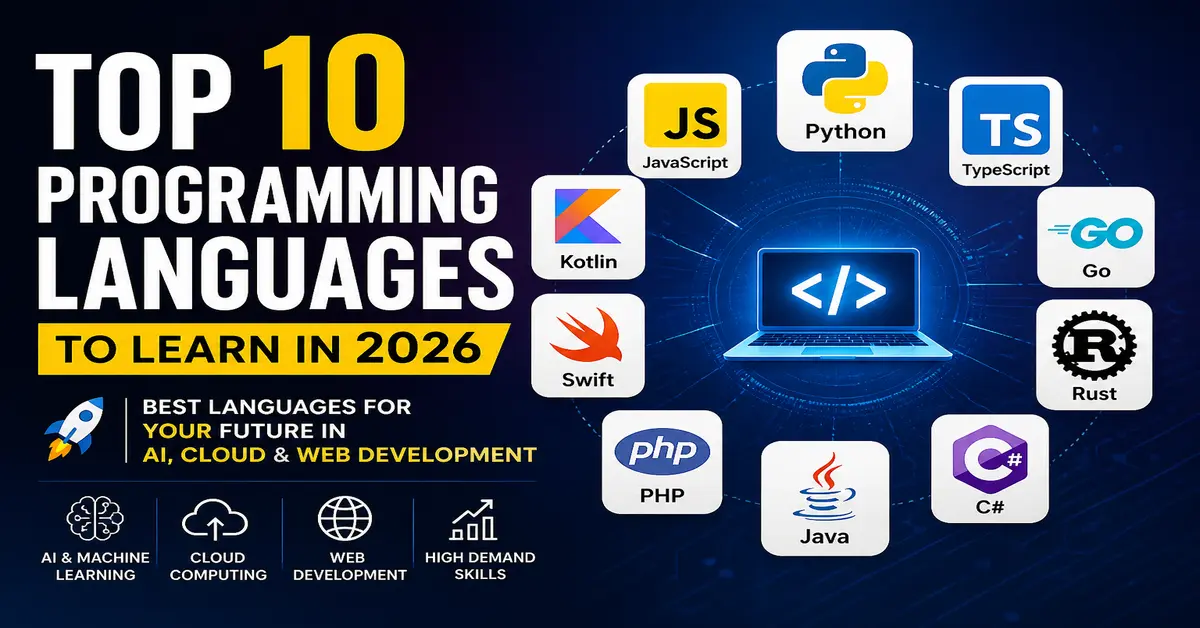
The programming landscape in 2026 is driven by AI, cloud computing, and scalability. Python, JavaScript, and TypeScript lead the market, while Go and Rust are shaping the future of backend and system programming.
If you want to build a successful career, focus on learning one core language deeply and then expand into related technologies.
Frequently Asked Questions
Which programming language is best for beginners in 2026?
Python is considered the best programming language for beginners due to its simple syntax, readability, and wide range of applications including web development, data science, and artificial intelligence.
Which programming languages are most in demand in 2026?
The most in-demand programming languages in 2026 include Python, JavaScript, TypeScript, Go, and Rust, as they are widely used in AI, cloud computing, and modern web development.
Is coding still a good career in 2026?
Yes, coding remains one of the most in-demand and high-paying careers in 2026 due to the rapid growth of AI, automation, and digital transformation across industries.
Should I learn Java or Python in 2026?
If your goal is AI or data science, Python is the better choice. For enterprise applications and large-scale systems, Java remains a strong and reliable option.
Is TypeScript better than JavaScript?
TypeScript is better for large-scale applications because it adds static typing to JavaScript, improving code quality and maintainability, while JavaScript remains essential for core web development.
Which programming language has the highest salary?
Languages like Rust, Go, and Python often offer higher salaries due to their demand in high-performance systems, cloud computing, and artificial intelligence.
Stay updated with our latest news, special offers, and exclusive updates directly in your inbox.