Last Updated on August 4, 2026
Are you planning to connect your Joomla website with mobile applications, third-party software, or external platforms? If yes, then understanding Joomla 6 Web Services is essential.
Joomla 6 Web Services provide a modern REST API that allows developers to securely access and manage Joomla data without logging into the administrator dashboard. Whether you want to build a mobile app, integrate CRM software, create automation, or connect multiple websites, Joomla 6 Web Services make the process much easier.
In this beginner-friendly guide, you’ll learn what Joomla 6 Web Services are, how they work, their benefits, authentication methods, available endpoints, and practical use cases.
What are Joomla 6 Web Services?
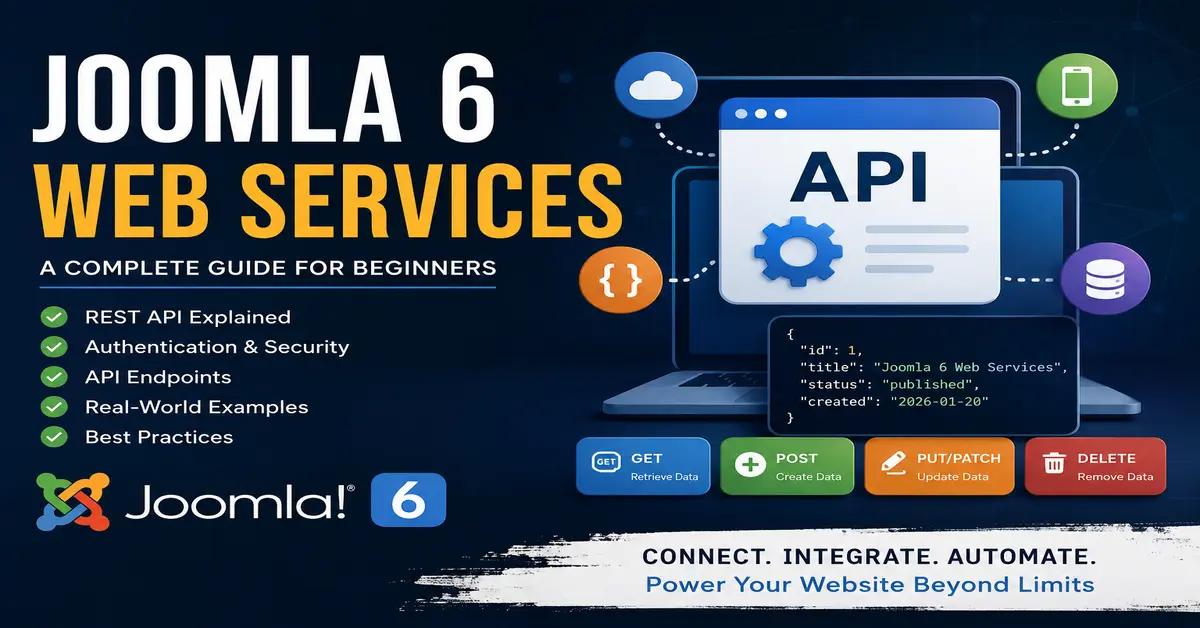
Joomla 6 Web Services are RESTful APIs built into Joomla that allow applications to communicate with your website using HTTP requests such as GET, POST, PUT, PATCH, and DELETE.
Instead of manually working inside the Joomla Administrator panel, external applications can request data, create content, update records, or delete information securely through API endpoints.
For example, a mobile application can display your latest Joomla articles directly from your website without requiring duplicate content management.
If you’re new to Joomla or want to understand how the CMS is structured before working with APIs, we recommend reading our What is Joomla? Understanding Joomla Architecture guide. It explains how Joomla’s core components work together, making it easier to understand how Web Services access and manage website data.
Joomla uses JSON as the standard data format, making integration simple with almost every programming language.
Why Use Joomla 6 Web Services?
Modern websites rarely work alone. Businesses often connect their websites with CRMs, ERPs, mob ile apps, payment systems, and marketing tools. Joomla 6 Web Services provide a secure bridge between Joomla and these external systems.
1. Build Mobile Applications
You can create Android or iOS applications that fetch articles, categories, users, or custom data directly from your Joomla website.
2. Integrate Third-Party Software
Connect Joomla with:
- CRM systems
- ERP software
- Email marketing platforms
- Inventory management systems
- Learning Management Systems (LMS)
3. Automate Daily Tasks
Instead of manually entering data, automation tools can create articles, update users, publish content, or synchronize databases automatically.
4. Share Data Across Multiple Websites
If your organization operates multiple Joomla websites, Web Services allow them to exchange information automatically.
How Joomla 6 Web Services Work
The workflow is straightforward.
- An application sends an HTTP request.
- Joomla verifies authentication.
- The API processes the request.
- Joomla returns the requested data in JSON format.
Example:
GET /api/index.php/v1/content/articles
The server returns a JSON response containing the available articles.
To better understand the principles behind REST APIs, you can refer to the official MDN Web Docs. It provides comprehensive documentation on HTTP requests, JSON, and modern web APIs that form the foundation of Joomla Web Services.
Common HTTP Methods Used
| Method | Purpose |
|---|---|
| GET | Retrieve information |
| POST | Create new data |
| PUT | Replace existing data |
| PATCH | Update specific fields |
| DELETE | Remove data |
Authentication in Joomla 6 Web Services
Security is one of the most important parts of any API.
Joomla 6 supports secure authentication methods to ensure only authorized users can access your data.
API Tokens
API Tokens are commonly used for secure communication. Each authorized user can have a unique token that must be included in every request.
Example:
Authorization: Bearer YOUR_API_TOKEN
This prevents unauthorized access to your website data.
Available Joomla 6 API Resources
Joomla provides APIs for several core components.
- Articles
- Categories
- Tags
- Users
- Menus
- Contacts
- Banners
- Fields
- Languages
- Workflows
Extension developers can also create APIs for their own components.
Benefits of Joomla 6 Web Services
Improved Automation
Businesses can automate repetitive tasks and reduce manual work.
Easy Integration
Joomla connects easily with modern software solutions.
Better Performance
Applications can request only the required data instead of loading full web pages.
Flexible Development
Developers can build mobile apps, desktop applications, and web applications using the same Joomla backend.
Future Ready
REST APIs have become the standard for modern web development. Joomla 6 follows industry standards, making it easier to build scalable applications.
Real-World Examples of Joomla 6 Web Services
Here are some practical examples where Joomla Web Services are useful:
- News mobile application
- Hotel booking system
- School management portal
- E-learning platform
- Customer dashboard
- Inventory synchronization
- CRM integration
- Multi-website content sharing
Who Should Learn Joomla 6 Web Services?
Learning Joomla Web Services is valuable for:
- Joomla developers
- PHP developers
- Frontend developers
- Mobile app developers
- Website owners
- Digital agencies
- Freelancers
- Business owners
Things to Keep in Mind
- Always use HTTPS.
- Protect your API Tokens.
- Assign proper user permissions.
- Validate incoming data.
- Keep Joomla updated.
- Limit API access where possible.
- Monitor API usage regularly.
If you’re planning to build modern applications with Joomla, our growing collection of Joomla Tutorials covers everything from installation and configuration to advanced development topics. Following these tutorials will help you get the most out of Joomla 6 and its powerful Web Services capabilities.
Conclusion
Joomla 6 Web Services provide a powerful and secure way to connect your Joomla website with external applications. Whether you’re building a mobile app, integrating business software, or automating workflows, Web Services offer the flexibility needed for modern web development.
If you’re new to Joomla APIs, start by understanding REST concepts and authentication. Once you’re comfortable with the basics, you’ll be able to build powerful integrations that save time and improve efficiency.
For official documentation, API references, and the latest development updates, visit the Joomla Documentation. It contains detailed information about Joomla 6 features, Web Services, authentication, and developer resources.
Frequently Asked Questions (FAQs)
What are Joomla 6 Web Services?
Joomla 6 Web Services are REST APIs that allow external applications to communicate with your Joomla website securely using HTTP requests.
Are Joomla 6 Web Services free?
Yes. Joomla includes Web Services as part of its core features, so no additional license is required.
Do I need programming knowledge?
Basic knowledge of REST APIs, JSON, and HTTP requests is helpful, but beginners can learn the concepts step by step.
Can I build a mobile app using Joomla Web Services?
Yes. Mobile applications can retrieve and manage Joomla data through the REST API.
Are Joomla Web Services secure?
Yes. When configured correctly with HTTPS, API Tokens, and proper permissions, Joomla Web Services provide secure communication.
Stay updated with our latest news, special offers, and exclusive updates directly in your inbox.