
Skip to content
JoomTech Solutions
  • Home
  • Joomla Tutorial
  • WordPress Tutorial
    • Drupal tutorials
  • Upwork Tutorial
    • Fiverr Tutorials
  • Tech Support
  • Contact us
× Close Menu
Open Menu

WordPress Security Tips for Small Businesses (Beginner-Friendly Guide)

February 1, 2026 Author: Sanjeev Kumar
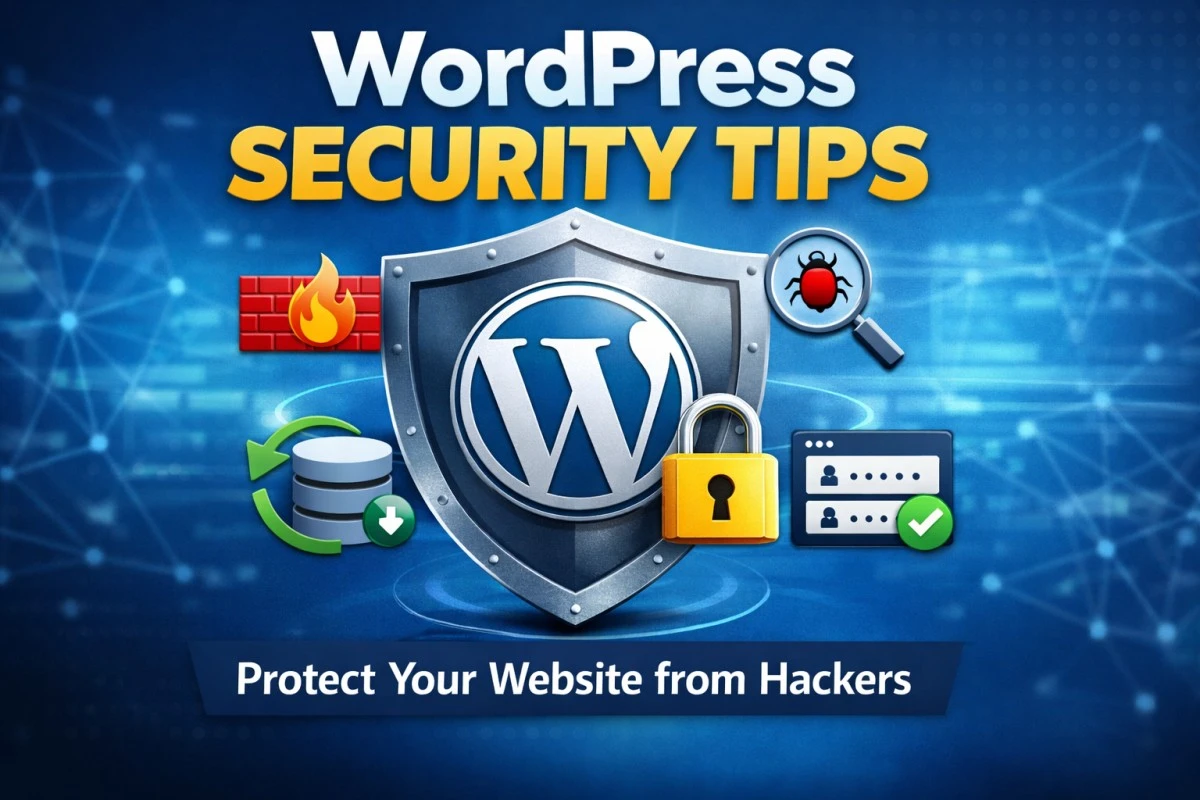
WordPress security tips for small businesses

What are the best WordPress security tips for small businesses?

The best WordPress security tips for small businesses include keeping WordPress updated, using strong passwords, enabling two-factor authentication, installing a security plugin, taking regular backups, and securing hosting with SSL.
These steps help protect your website from hacking, malware, and data theft without requiring advanced technical skills.

Table of Contents

Toggle
    • What are the best WordPress security tips for small businesses?
  • Why WordPress Security Is Important for Small Businesses
  • Essential WordPress Security Tips for Small Businesses
    • 1. Keep WordPress Core, Themes, and Plugins Updated
    • 2. Use Strong Login Credentials
    • 3. Enable Two-Factor Authentication (2FA)
    • 4. Install a Trusted WordPress Security Plugin
    • 5. Limit Login Attempts
    • 6. Secure Your WordPress Hosting
    • 7. Take Regular Website Backups
    • 8. Change the Default WordPress Login URL
    • 9. Set Correct File Permissions
    • 10. Disable File Editing in WordPress Admin
  • Common WordPress Security Mistakes Small Businesses Make
  • Frequently Asked Questions (FAQ) – Featured Snippet Ready
    • Is WordPress secure for small businesses?
    • Do small business WordPress sites really get hacked?
    • What is the best security plugin for WordPress?
  • Final Thoughts

Why WordPress Security Is Important for Small Businesses

WordPress websites owned by small businesses are frequent targets because they often lack basic security protections. A hacked site can lead to downtime, data loss, Google blacklisting, and loss of customer trust.


Essential WordPress Security Tips for Small Businesses

1. Keep WordPress Core, Themes, and Plugins Updated

Keeping WordPress updated is the most important security step.

  • Update WordPress core regularly
  • Update themes and plugins
  • Delete unused plugins and themes

2. Use Strong Login Credentials

Weak credentials make brute-force attacks easy.

Best practices for WordPress login security:

  • Avoid the username admin
  • Use passwords with 12+ characters
  • Combine letters, numbers, and symbols

3. Enable Two-Factor Authentication (2FA)

Two-factor authentication adds an extra verification step during login, preventing unauthorized access even if your password is compromised.

Popular 2FA methods:

  • Authenticator apps
  • Email OTP
  • SMS verification

4. Install a Trusted WordPress Security Plugin

A WordPress security plugin helps protect your site 24/7.

Common features include:

  • Firewall protection
  • Malware scanning
  • Login protection
  • File monitoring

Recommended plugins:

  • Wordfence
  • iThemes Security
  • All-in-One WP Security

5. Limit Login Attempts

Limiting login attempts protects your site from automated attacks.

Why this works:

  • Blocks bots after failed attempts
  • Reduces server load
  • Prevents password guessing

6. Secure Your WordPress Hosting

Secure hosting is the foundation of WordPress security.

Checklist:

  • Free SSL certificate (HTTPS)
  • Latest PHP version
  • Server firewall enabled
  • Malware protection

7. Take Regular Website Backups

Backups allow quick recovery if your site is hacked or crashes.

Best backup practices:

  • Automatic daily or weekly backups
  • Off-site storage
  • Test backups occasionally

8. Change the Default WordPress Login URL

Changing the default login URL reduces automated bot attacks.

Default URLs:

  • /wp-admin
  • /wp-login.php

This step improves security but should be combined with other measures.


9. Set Correct File Permissions

Incorrect permissions can allow hackers to modify files.

Recommended WordPress file permissions:

  • Files: 644
  • Folders: 755

Avoid 777 permissions.


10. Disable File Editing in WordPress Admin

Disabling file editing prevents attackers from injecting malicious code.

Add this line to wp-config.php:

define('DISALLOW_FILE_EDIT', true);

Common WordPress Security Mistakes Small Businesses Make

  • Using nulled themes or plugins
  • Ignoring updates
  • Weak passwords
  • No backups
  • Poor hosting security

Frequently Asked Questions (FAQ) – Featured Snippet Ready

Is WordPress secure for small businesses?

Yes, WordPress is secure for small businesses when basic security practices are followed, such as regular updates, strong passwords, backups, and security plugins.


Do small business WordPress sites really get hacked?

Yes, small business WordPress sites are common targets because attackers use automated bots that scan all websites, not just large ones.


What is the best security plugin for WordPress?

There is no single “best” plugin, but popular and reliable options include Wordfence, iThemes Security, and All-in-One WP Security.


Final Thoughts

By following these WordPress security tips for small businesses, you can significantly reduce hacking risks and protect your website, customers, and brand. Start with updates, strong passwords, backups, and a security plugin for maximum protection.
Categories: WordPress Tutorials
Tags: Common WordPress Mistakes, File Permissions, Malware Protection, Website Security Tips, WordPress Backups, WordPress Best Practices, WordPress Hosting, WordPress Login Security, WordPress Plugins, WordPress Security

Post navigation

Previous: 15+ Best Joomla Templates for Free in 2026: Professional Designs for Every Niche

Popular Posts

Categories

  • Drupal tutorials
  • Fiverr Tutorials
  • HTML Tutorials
  • Joomla Tutorials
  • Tech Support
  • Uncategorized
  • Upwork Tutorials
  • Upwork Videos
  • WordPress Tutorials

Recent Posts

  • WordPress Security Tips for Small Businesses (Beginner-Friendly Guide)
  • 15+ Best Joomla Templates for Free in 2026: Professional Designs for Every Niche
  • Best WordPress Plugins for Blogs 2026
  • How to Make Money Online in 2026
  • Top 10 Free Joomla Templates in 2026

Join Us

Important Links

  • About us
  • Terms & Condition
  • Privacy Policy
  • Sitemap
© 2026 JoomTech Solutions
 / Theme: Really Simple / License: GPLv3
We use cookies on our website to give you the most relevant experience by remembering your preferences and repeat visits. By clicking “Accept All”, you consent to the use of ALL the cookies. However, you may visit "Cookie Settings" to provide a controlled consent Read More.
Cookie SettingsAccept All
Manage consent

Privacy Overview

This website uses cookies to improve your experience while you navigate through the website. Out of these, the cookies that are categorized as necessary are stored on your browser as they are essential for the working of basic functionalities of the website. We also use third-party cookies that help us analyze and understand how you use this website. These cookies will be stored in your browser only with your consent. You also have the option to opt-out of these cookies. But opting out of some of these cookies may affect your browsing experience.
Necessary
Always Enabled
Necessary cookies are absolutely essential for the website to function properly. These cookies ensure basic functionalities and security features of the website, anonymously.
CookieDurationDescription
cookielawinfo-checkbox-analytics11 monthsThis cookie is set by GDPR Cookie Consent plugin. The cookie is used to store the user consent for the cookies in the category "Analytics".
cookielawinfo-checkbox-functional11 monthsThe cookie is set by GDPR cookie consent to record the user consent for the cookies in the category "Functional".
cookielawinfo-checkbox-necessary11 monthsThis cookie is set by GDPR Cookie Consent plugin. The cookies is used to store the user consent for the cookies in the category "Necessary".
cookielawinfo-checkbox-others11 monthsThis cookie is set by GDPR Cookie Consent plugin. The cookie is used to store the user consent for the cookies in the category "Other.
cookielawinfo-checkbox-performance11 monthsThis cookie is set by GDPR Cookie Consent plugin. The cookie is used to store the user consent for the cookies in the category "Performance".
viewed_cookie_policy11 monthsThe cookie is set by the GDPR Cookie Consent plugin and is used to store whether or not user has consented to the use of cookies. It does not store any personal data.
Functional
Functional cookies help to perform certain functionalities like sharing the content of the website on social media platforms, collect feedbacks, and other third-party features.
Performance
Performance cookies are used to understand and analyze the key performance indexes of the website which helps in delivering a better user experience for the visitors.
Analytics
Analytical cookies are used to understand how visitors interact with the website. These cookies help provide information on metrics the number of visitors, bounce rate, traffic source, etc.
Advertisement
Advertisement cookies are used to provide visitors with relevant ads and marketing campaigns. These cookies track visitors across websites and collect information to provide customized ads.
Others
Other uncategorized cookies are those that are being analyzed and have not been classified into a category as yet.
SAVE & ACCEPT
Go to mobile version